

Remembering Barbara Nichols, barrier breaker
This story appears in the August 2026 issue of the WSNA Newsletter.

Barbara Nichols, DL(h), DSc(h), PedD(h), MSN, RN, FAAN, was a nursing pioneer, a barrier breaker, an advocate for justice, and a visionary leader. She was also a trusted colleague, a loyal friend, and a mentor and inspiration to countless people. Throughout more than six decades of leadership, she was a champion for nursing excellence, health equity, diversity, professional advancement, and the essential role of nurses in shaping policy. Barbara died on July 22, 2026, at the age of 88.
I first met Barbara in 1989 when I went to work for the California Nurses Association (CNA), which was then an affiliate of the American Nurses Association (ANA). Barbara was CNA’s executive director. But prior to meeting her, I certainly knew of her. She had been ANA president from 1978 to 1982 —ANA’s first Black president. Barbara’s commitment to diversity and racial justice was a defining aspect of her career.
Born in Maine, Barbara earned her nursing diploma from the Massachusetts Memorial Hospital School of Nursing in 1959. (She later earned a bachelor’s degree from Case Western Reserve University and a master’s degree from the University of Wisconsin.) Her first nursing position was at Boston Children’s Hospital, where she was the only Black registered nurse. After serving in the U.S. Navy Nurse Corps, she married Larry Nichols and moved with him to Madison, Wis., where they raised three children: daughter Nichelle and twin sons Karl and Kent.
Barbara became active in the Wisconsin Nurses Association and became its first Black president in 1970, also serving on the ANA Board of Directors before being elected president. She led ANA while serving as the director of in-service education at St. Mary’s Hospital Medical Center in Madison.
As ANA president, Barbara was a champion for expanding nursing’s role in advocacy through policymaking, collective bargaining, and professional advancement. She did the same in her later role as CNA executive director. For example, under her leadership, CNA spearheaded its first effort to achieve mandatory nurse staffing ratios.
In 1983, following her service as ANA president, she was appointed Secretary of the Wisconsin Department of Regulation and Licensing, becoming the first Black woman in Wisconsin to hold a cabinet-level position.
Barbara’s impact extended globally. She served on the Board of Directors of the International Council of Nursing from 1981 to 1985. In 1997, Barbara was part of a delegation invited by South Africa's Truth & Reconciliation Commission, chaired by Archbishop Desmond Tutu, to learn about and document the health effects of apartheid. She coauthored Human Rights and Health: The Legacy of Apartheid, a report providing the delegation’s findings, offering recommendations, and examining implications for healthcare in the U.S.
Barbara was board president and later CEO of the Commission on Graduates of Foreign Nursing Schools (CGFNS, now TruMerit), which credentials international nurses and other health professionals. As CEO, she shaped CGFNS into a global force. She championed ethical nurse recruitment — promoting the fair treatment of internationally recruited nurses while protecting against the depletion of nursing workforce resources in their countries of origin.
Under Barbara’s leadership, CGFNS partnered with the ICN to launch the International Centre on Nurse Migration to advance these goals. When CGFNS held an invitational conference on The Impact of Global Nurse Migration on Health Services Delivery, I had the privilege — as then-editor of the journal Policy, Politics, & Nursing Practice — of publishing papers from that conference in a special issue in 2006.
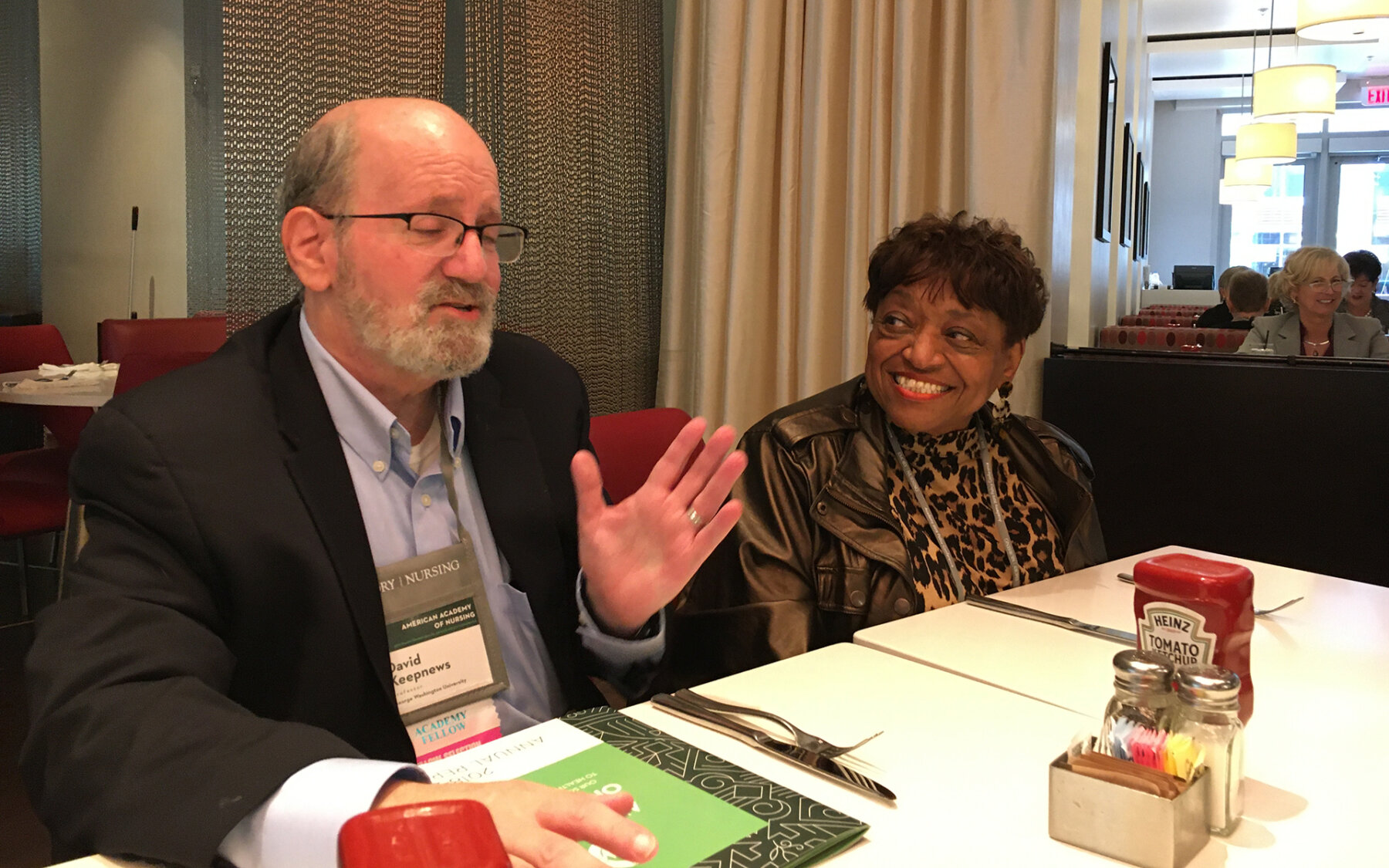
After leaving CGFNS, Barbara returned to Wisconsin and promptly flunked retirement, serving as diversity coordinator and then executive director of the Wisconsin Center for Nursing until 2025. She also volunteered with community and service organizations in her adopted hometown of Madison.
At the 2022 ANA Membership Assembly, Barbara introduced a motion to approve the ANA’s Racial Reckoning Statement — a milestone document acknowledging its history of racism and committing to ongoing reconciliation and accountability. Her motion was approved with unanimous consent, and Barbara once again made history.
Her legacy includes three honorary doctorates and numerous other honors. Among them, she was named a Living Legend of the American Academy of Nursing, which also bestowed her with its Lifetime Legacy Award in 2023. Barbara received the ANA’s Mary Mahoney Award (named for the first Black registered nurse in the United States) and was inducted into the ANA Hall of Fame in 2022. She was named a Scholar in the National Black Nurses Association’s Institute of Excellence inaugural class of 2006.
But it’s not possible to summarize Barbara’s legacy simply by listing the positions she held and the honors she received. She will be remembered most of all for her wide-ranging impact. Barbara had a commanding presence — she could even seem intimidating at first. That impression faded away the first time anyone saw her bright smile or heard her raucous laughter. She was a fierce advocate with a wicked sense of humor. Her ability to break barriers came not only from being the first Black person in several highly important and visible roles — as significant as that is. It also came from her tireless passion for equity and justice. She was committed to moving nursing forward in the U.S. and globally. And she never let her accomplishments blind her to the continuing problems of racism and discrimination.
I consider myself lucky to have known Barbara. Beyond our initial working relationship more than 35 years ago, we worked together on other issues throughout the years, kept in touch, and I — like many others — often turned to her as a sounding board, a source of advice and support, and a co-conspirator. Seeing her was always a high point (often the high point) of national nursing meetings.
I know I am by no means alone in saying how deeply Barbara Nichols will be missed.
David Keepnews, PhD, JD, RN, FAAN, is the former WSNA executive director. He would like to acknowledge Catherine J. Dodd, PhD, RN, FAAN, for her contributions to this article.