1920s: Dealing with oversupply

In the 1920s, amid a saturated nursing field from WWI demand, WSGNA pushed for higher educational standards and shorter working hours to address rising unemployment.
2 minutes to read
Table of contents
History banner 1920s

Nurses were in high demand during and after WWI, which led to nursing schools being filled with new students. Within a few years, the nursing field became saturated as new graduates sought employment, and by the late 1920s, unemployment had reached alarming rates. WSGNA worked to support higher educational requirements and shorter working hours to address the problem of oversupply.
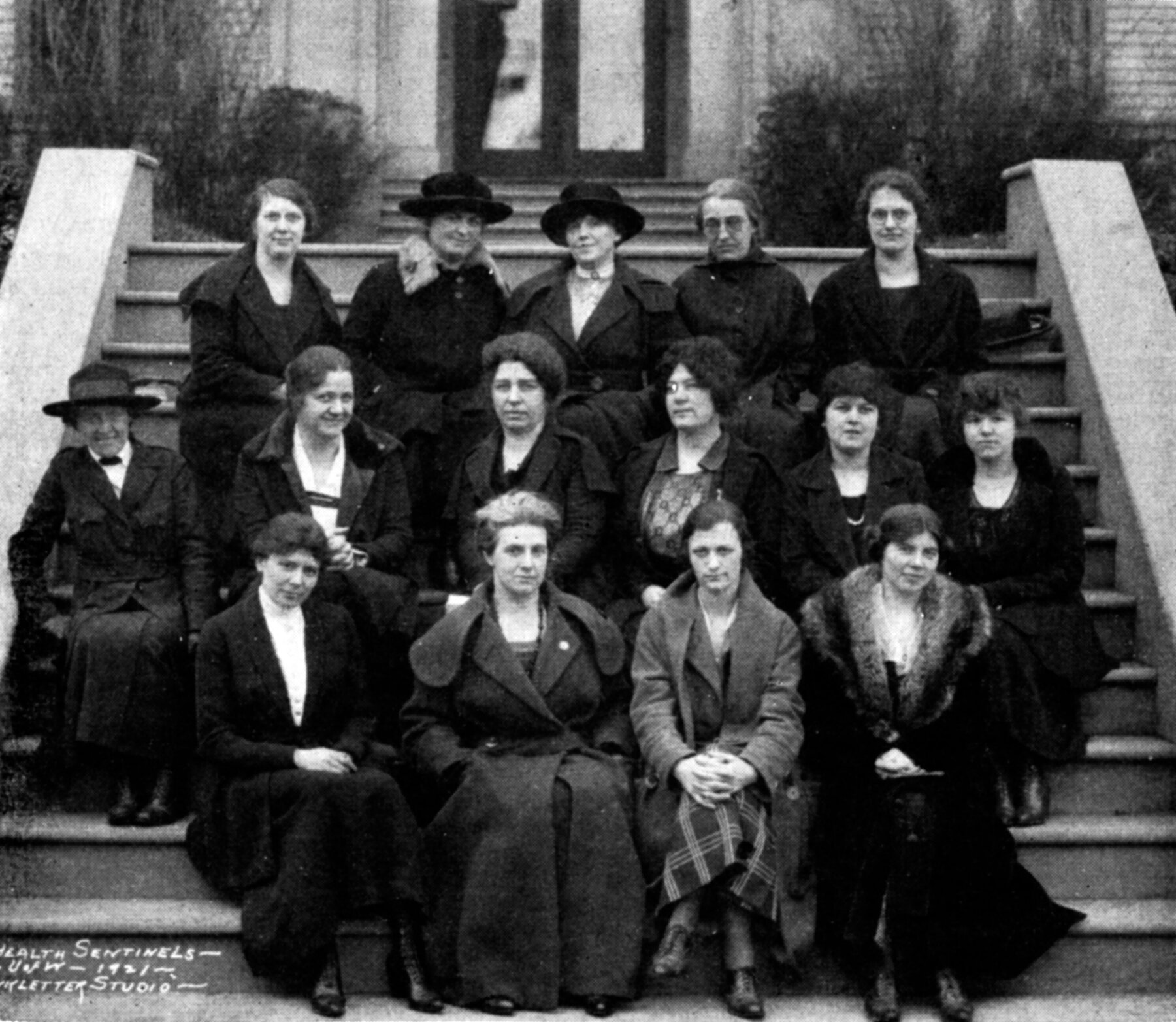

The “Health Sentinels” were an early nurses’ club at the University of Washington. (1921)

1920-1929 timeline

WSGNA went on record asking for military rank for WWI nurses in support of ANA’s position. In 1920, Congress granted partial rank, from second lieutenant to major, to an estimated 20,000 Army nurses in recognition of their service.


In 1922, WSGNA established a Private Duty Section to address the needs of nurses working as private duty nurses. The Private Duty Section was key in the statewide adoption of 12-hour shifts for private duty nurses.

In 1923, Etta B. Cummings, WSGNA’s first treasurer, died and left her house and estate, valued at $2,500, to establish the Etta B. Cummings Memorial Fund, to be used for “Sick and Worn-Out Nurses of Washington State.” This fund, now called the Emergency Assistance Grant Fund, is administered by the Washington State Nurses Foundation and disbursed $80,000 to 160 WSNA members experiencing significant financial hardship during COVID-19.


On Jan. 1, 1929, the first issue of The Bulletin, the official publication of WSGNA, was published. The Bulletin’s name was later changed to the Washington State Journal of Nursing and then The Washington Nurse.

Editorial!

The Bulletin, January 1929
Inaugural issue

We are sure that the desire in someone's heart, that the nurses of our State might have a medium through which to express themselves, was responsible for the inspirational thought that created our Bulletin; so this must be its purpose in part; not only those nurses from whom such creations are expected, but from the rank and file of us.

Most of us have beautiful pictures within ourselves; wonderful creations passing before our mind's eye; cannot we make word pictures of them, share our visions with our neighbors?

Would it not be interesting to go step by step with a nurse through some most unusual case where she has helped in the fight for some life with new methods and new drugs and won out? Unfortunately those battles are not all won.

Or to tell us of a wonderful vacation day in the country where she learned some of the secrets of Nature; or a bit of poetry. Please do not wait to be asked, just write it and send it on.

Another important reason for the creation of this Bulletin was that we might grow to know each better; what we are doing;—that one District might be an inspiration to another. We have had State Headquarters for some time, but this publication will give us something in common around which to gather and through which to express our thoughts.

When each person carries a share, the burden is not too heavy for any one, and we are sure that each person will carry her share. If the spirit with which each District has entered into the work this month is a forerunner of all the rest, we certainly have great reason to be encouraged.

We have started out with enthusiasm, and with a steady purpose in our hearts, I am sure our little Bulletin will have a place in our future development.

Leadership


The leading voice and advocate for nurses in Washington

WSNA provides representation, education and resources that allow nurses to reach their full professional potential and focus on caring for patients. WSNA has represented nurses in our state since 1908, leveraging our collective voice to successfully advocate with employers, state agencies and the state Legislature for better working conditions, safe staffing, fair compensation and patient safety. For more than 110 years, WSNA has championed issues that support nurses, advance professional standards and improve the health of individuals and families in Washington.


The Washington State Nurses Association is affiliated with

Washington State Nurses Association
575 Andover Park West, Suite 101
Seattle, WA 98188

Contact us


Washington State Nurses Association is accredited as a provider of nursing continuing professional development by the American Nurses Credentialing Center's Commission on Accreditation.

Theme
Washington State Nurses Association, WSNA, and related logos are registered trademarks of the Washington State Nurses Association and may not be used without prior written permission.
© 2005-2026. All rights reserved. Privacy policy