

The path to a breakthrough public health contract
This story appears in the August 2026 issue of the WSNA Newsletter.
Member surveys. Research studies. Stickers, T-shirts, buttons, signs. Public testimonies, editorials, public letters of support, rallies. An unfair labor practice charge with more than 60 violations.
And, finally, after 16 months of bargaining and mobilizing, nurses at Public Health - Seattle & King County ratified a four-year contract that rewarded their experience.
Across America, nurses count on a simple promise: Experience matters. In the vast majority of unionized workplaces, nurses can count on an annual step raise.
But for nurses at Public Health Seattle & King County, experience only mattered to a point. After 10 years, annual raises stopped, and the most a Public Health nurse could expect was a small annual cost of living increase.
King County Public Health nurses are the backbone of our health system and the front line of disease prevention. They serve 80,000 individuals and families across our region. In the Seattle & King County system, nurses represented by WSNA provide vital care to our most at-risk populations.
“Every one of us does this work because we care about our community,” said Kiesha Garcia-Stubbs, community health nurse and member of the WSNA bargaining team. “Nurses at Public Health could earn more at other jobs, but we want to care for people who have nowhere else to turn. All we wanted from Public Health was a contract that respected our work and made it possible for nurses who were called to this job to stay in this job.”
From community clinics to maternal care to street outreach teams to jails, the work of Public Health nurses helps identify and stop emerging health crises, treat our most vulnerable neighbors, and keep all our communities healthier.
Public Health-Seattle & King County refuses to recognize experience
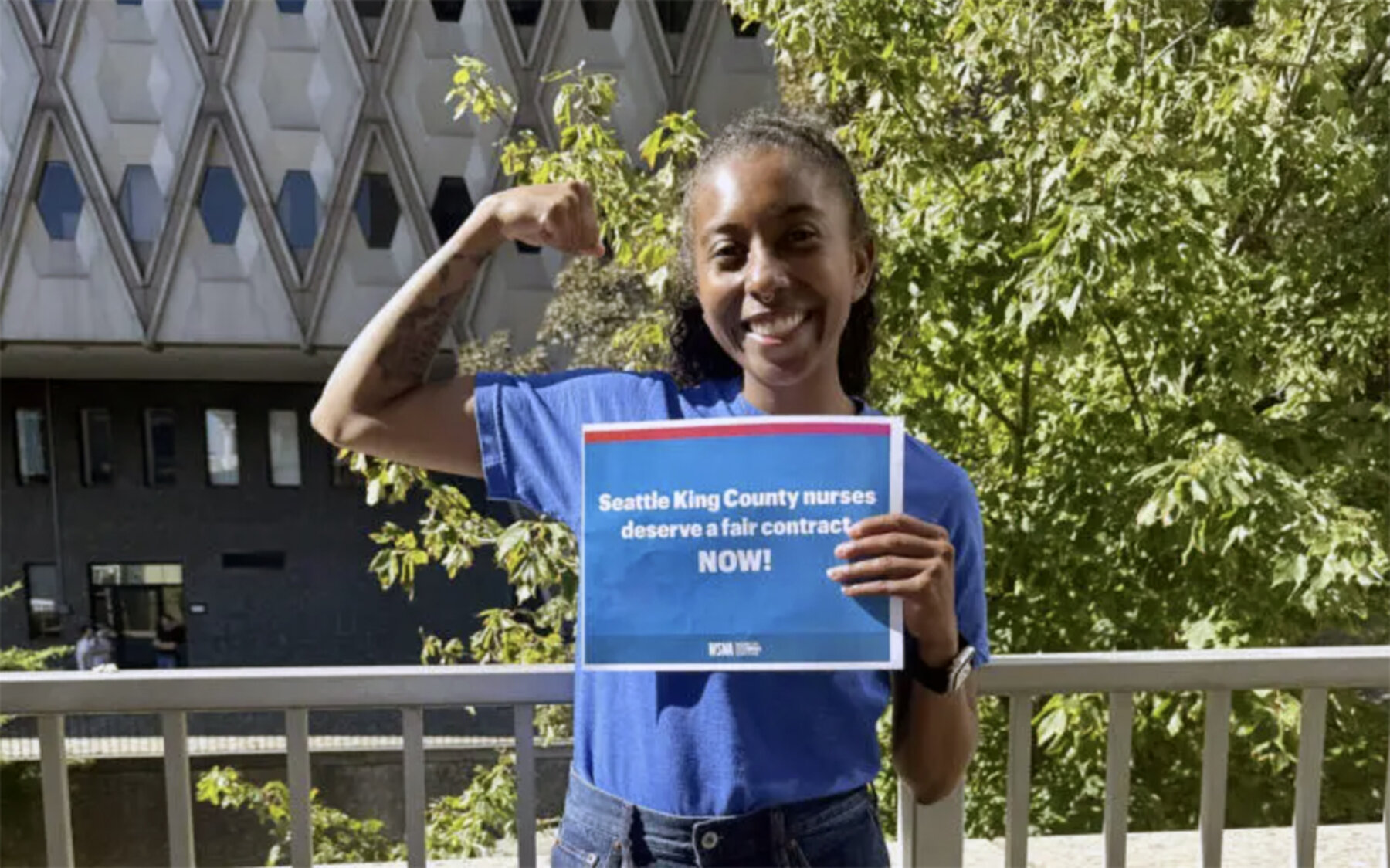
Public Health’s refusal to reward experience took a toll on nurses — and on patient care. “This is not only hurting the retention of experienced nurses,” Garcia-Stubbs wrote in a column, “but of early-career nurses who struggle to envision a future with the county.”
For years, nurses had pushed for a contract that put them in line with industry standards. In each contract cycle, Public Health management refused, using tired lines like:
“Comparing public health to the private sector is apples to oranges.”
“This is how we’ve always done it.”
“There’s no need for change.”
After a contentious contract cycle in 2023, Public Health nurses dug in with a simple commitment to one another: build the power to win step raises that respected their experience.
With firm resolve, the Public Health nurses got to work.
Nurses present financial analysis and report on wage scale
In 2023, the county said it would study the issue of step increases, but that work didn’t happen allegedly for financial reasons. The unit created a committee to work on longevity wage scale proposals for its 2025 contract negotiations. Armed with a detailed financial analysis provided by WSNA staff, Public Health nurses worked tirelessly throughout 2024 to create a well-researched report.
“The WSNA financial analysis made a real difference because it meant we could compare our wages and benefits to other nurses in the area and create demands that were based on the local market rates on Day One,” said Garcia-Stubbs.
The WSNA bargaining team presented the nurses’ first proposal to King County in February 2025.
King County didn’t bother to respond.
When management finally acknowledged the report, “They crapped all over it,” said one member of the bargaining team.
Through most of 2025, management continued to make its position clear: Nurses didn’t deserve respect.
While management played games, nurses organized
Beginning in February, nurses wore solidarity stickers. The bargaining team built consensus through a workplace survey that saw huge participation. They organized around Nurses Week and sent a delegation to the Board of Health to make their demands known.
As months rolled by, management scheduled bargaining sessions and meetings. Bargaining team members cleared their schedules and prepared detailed meeting agendas and items for negotiations.
Time and again, management canceled scheduled meetings at the last minute, showed up unprepared, or refused to bargain in good faith.
“This was my first experience bargaining, and I was really taken aback by the amount of disrespect that management showed at the table,” said Garcia-Stubbs. “They wouldn’t take in what we were saying or have a real negotiation about it.”
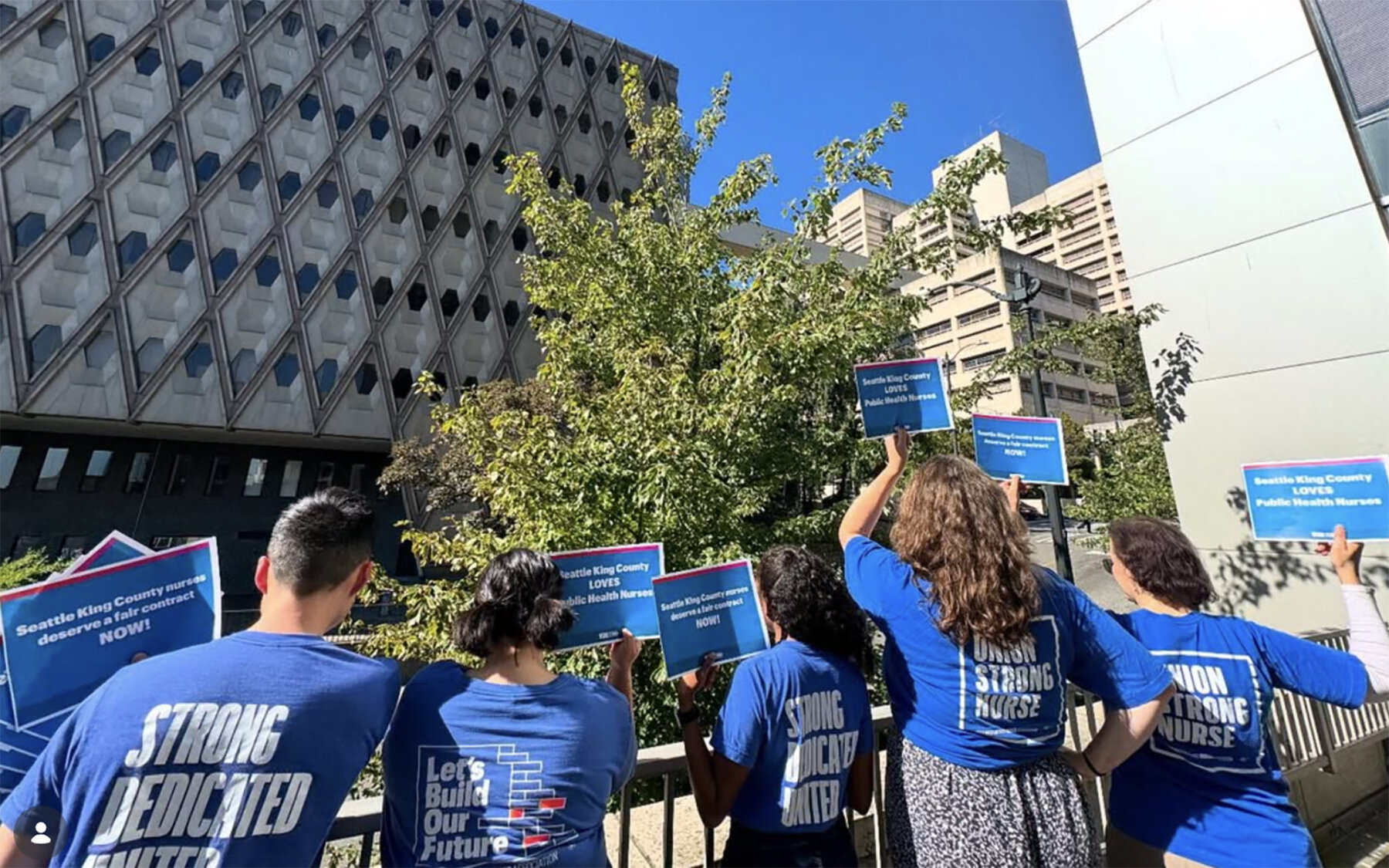
Nurses kept organizing.
A surge in staffing complaints showed the true conditions in jail health and at the juvenile detention center. Nurses launched a public petition to expand awareness in the community and to build support from labor partners.
Slowly, management began to offer real concessions. The bargaining team made progress on continuing education hours and language to protect the reporting of missed breaks. But on the central issue of a fair wage step scale, management refused to budge.
Public and political support
Throughout the summer, nurses organized local unit meetups. They held visibility actions in person and drove the message online by telling nurse stories.
In September, nurses organized the Rally to Remember. Public Health team members held a rally in Seattle’s International District and distributed hundreds of public petition flyers to area residents.
“When I saw how many people came out to support us, I almost cried,” said Elena Schensted, a bargaining team member and community health nurse. “Being disrespected by management wears you down. But when our fellow nurses, our patients, and our neighbors showed up for us, it meant so much.”
In October, nurses attended a King County Council meeting. In their WSNA T-shirts and holding support placards, they made clear demands and delivered the community petition.
While bargaining moved forward on other issues, management continued to stonewall nurses on pay.
In the fall, as progress slowed, nurses filed an Unfair Labor Practice (ULP) charge against Public Health, detailing more than 60 violations related to bad faith bargaining, regressive bargaining, and failure to respond to information requests. In December, the Public Employment Relations Commission found that the ULP had merit.
A fork in the road
With the contract set to expire on December 31, nurses faced a fork in the road.
If they allowed the contract to expire, nurses would not receive raises in the existing contract. If they signed a new contract without improved steps, it would be at least two years before they could try again.
After a survey revealed overwhelming support to keep fighting, Public Health nurses let the contract expire.
The survey served as more than motivation for nurses. It provided momentum at the table. The WSNA bargaining team printed stories nurses had submitted on the survey and messages of support on bright yellow and orange paper and hung them all around the room before one bargaining session.
Inside the room, nurses called for a mediator to help unstick negotiations. Outside the room, nurses worked to build political power and public support. WSNA leaders from across the state leaned in, encouraging the nurses, building labor support, and pushing elected officials.
As they persisted, nurses secured public support from King County Councilmember Teresa Mosqueda. And other public officials spoke out in support.
A big contract victory
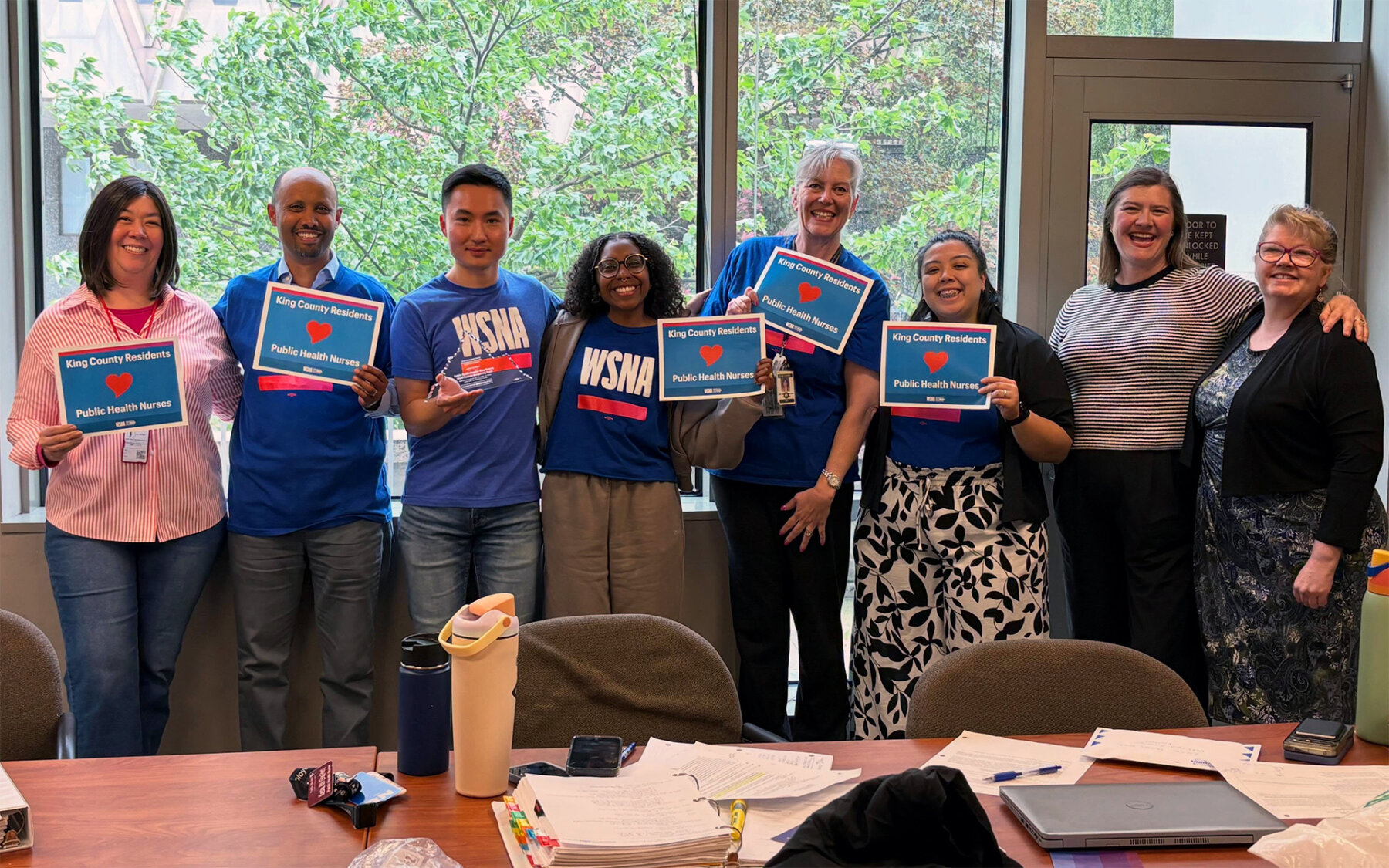
Finally, the bargaining team emerged with a tentative agreement that met the nurses’ needs. It included:
- A 21-step longevity wage scale to take effect in January 2028, under which every single nurse will make more faster, rejecting County proposals that would have divided the same pay over more steps
- FULL retroactive payment to January 1, 2026
- Stronger nondiscrimination language
- Continuation of reduced parking
- Master’s/doctoral step recognition
- Improvements to bilingual pay
- Non-retaliation for raising staffing concerns
- Improvements to continuing education money
- “Rules of the road” to ensure consistent new hire step placement is incorporated into the contract.
Nurses at Public Health stared down the largest regional government in Washington state. They refused to be bullied, intimidated, or ignored. And on June 4, 2026, members ratified a new four-year deal.
“Public Health nurses organized fearlessly and secured a landmark contract,” said the chair of WSNA’s Labor Executive Council, Edna Cortez. “They overcame a long history of disrespect through solidarity. WSNA is proud to represent these courageous nurses.”