

Firsthand accounts of WSNA labor history
This story appears in the May 2026 issue of the WSNA Newsletter.

Judy Huntington, MN, RN, served as executive director of WSNA from 1999 to 2017 and was WSNA president from 1979 to 1983. She graduated from nursing school at the University of Washington in 1968 and has witnessed six decades of nursing history in Washington state.
In recognition of Labor History Month, we talked with Huntington about two episodes of labor history.
1967: Threat of mass resignations
In 1967, Huntington was a student nurse working at Seattle Children’s between her junior and senior years of nursing school. The nurses were angry; they were offered $400 a month, which was barely enough to live on at the time.
Seattle Children’s was part of the Seattle Area Hospital Council, which represented 22 hospitals and settled all contracts collectively.
The nurses could not legally strike because federal labor law had not yet authorized collective bargaining for not-for-profit hospitals. In addition, the American Nurses Association (ANA) had a no-strike policy. Huntington said ANA’s no-strike policy, adopted in 1950, reflected the views of society at the time: Nursing was seen as a “calling” and “women’s work,” and nurses’ strikes were considered “unseemly and unethical.” (ANA delegates voted to rescind the no-strike policy in 1968.)
Because of these restrictions, nurses in Seattle and many other states opted to submit mass resignations instead of striking.
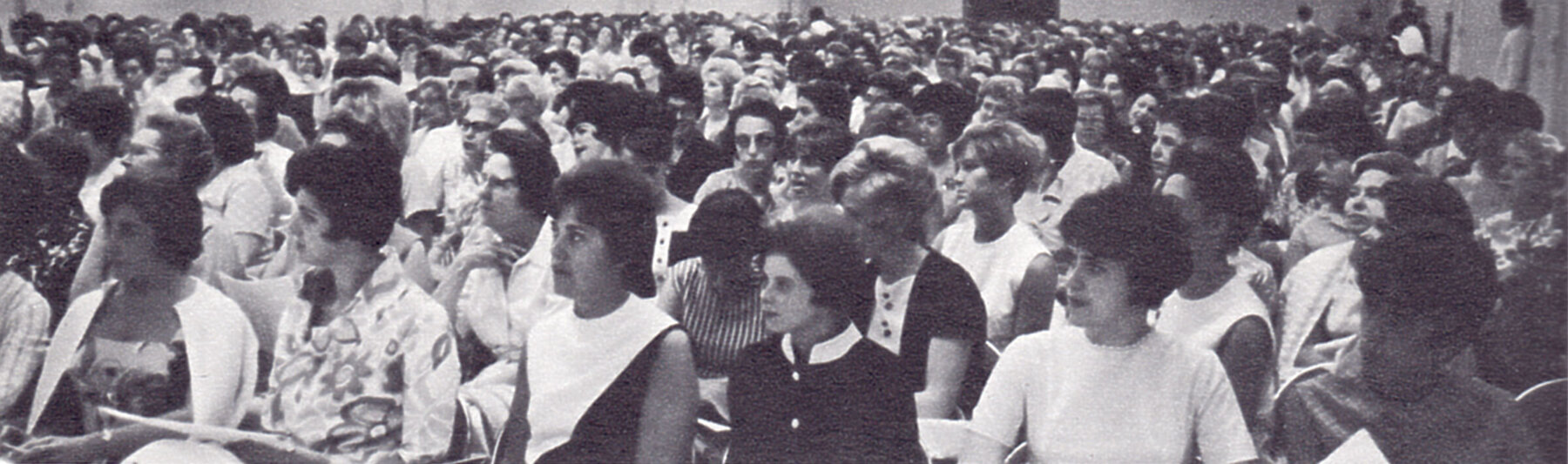
“About 1,200 of the 1,700 to 1,800 nurses in Seattle signed conditional mass resignations,” Huntington said. “The Seattle Area Hospital Council was proposing benefit takeaways and salaries below those of many other professions, including teachers and secretaries.”
At the time, several hospitals voluntarily bargained with nurses over pay and working conditions, but nurses did not gain the legal right to collective bargaining until 1974.
The threat of mass resignations at Children’s worked. A settlement was reached in July 1967 that gave nurses major improvements, and all nurses continued to work without the resignations taking effect.
1971: Seattle nurses prepare to strike
By 1971, Huntington was heavily involved in union work. She was not only the local unit chair for Seattle Children’s but also the chair of WSNA’s negotiating team, bargaining with the Seattle Area Hospital Council on behalf of WSNA nurses throughout the area.
In 1969, WSNA proposed state legislation granting collective bargaining rights in nonprofit healthcare facilities, which included binding arbitration to prevent strikes. The law passed in 1972 but was superseded by federal law in 1974. The passage of the healthcare amendments to the National Labor Relations Act gave federal recognition to the collective bargaining rights of all nurses and other healthcare workers.
In 1971, the Seattle Hospital Council proposed wage increases of 2 percent and a reduction in nurses’ sick-leave benefits. The nurses demanded the retention of sick-leave benefits and wage increases of 6 percent, which was just above the cost-of-living increase.
When hospital administrators refused to budge, the nurses at area hospitals announced on June 12 that they would strike.
During negotiations in late June, Huntington said a hospital administrator leaned across the table, blew cigar smoke in her face, and said, “Honey, it’s going to be a long, hot summer.”
“I sat up straight and replied, Mr. (name redacted), it’s probably going to be a lot hotter than you think,” she said,
The night before the scheduled strike, news cameras broadcast images of nurses painting picket signs at the WSNA office, including nurses from that administrator’s hospital.
Huntington said the administrator had warned those nurses that he would fire them if they went on strike. After seeing them willing to defy his threat, Huntington said the administrator called his colleagues and told them, “We can’t afford a strike.”
As tensions rose, Huntington received a morale boost from her dad. Late that night, during federal mediation, there was a knock on the door. It was a Western Union telegram for Huntington that read, “Give them hell. Love, Dad.”
The Seattle Hospital Council accepted the nurses’ proposal at 3 a.m., four hours before the strike deadline.
There were no cell phones or text messaging in 1971. Huntington recalled that the room had just four landline phones, and everyone was trying to reach nurses through telephone trees to tell them the strike had been called off. Union leaders, like Huntington, also drove to hospitals to tell nurses who were preparing to picket: “Put down your picket signs. Go to work! We have a settlement.”